>
IT News
>
When Security Stops Operations: What This Week’s California Cyberattack Signals About the Next Phase of Cyber Risk
When Security Stops Operations: What This Week’s California Cyberattack Signals About the Next Phase of Cyber Risk
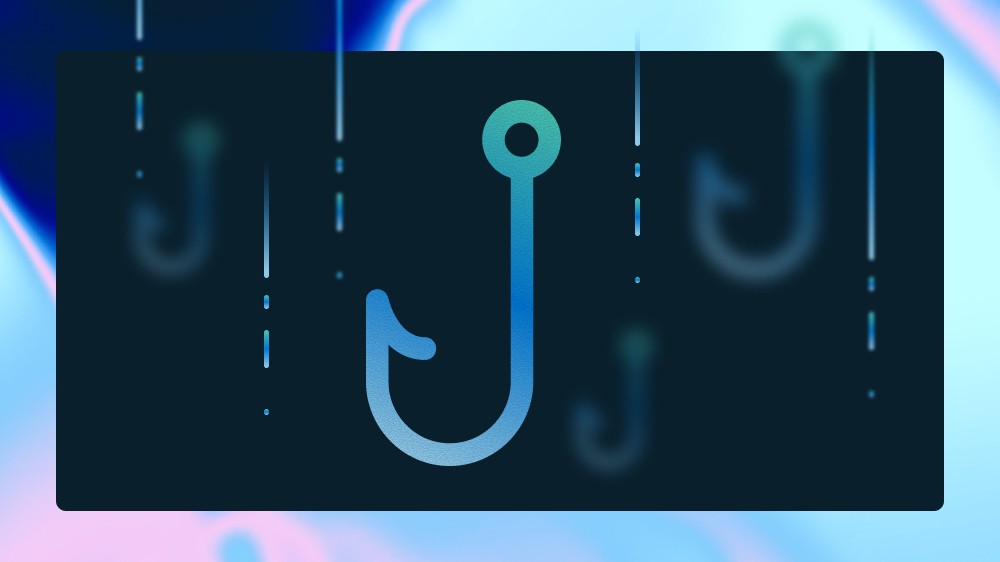
Last week, the city of Foster City, California, was forced to shut down portions of its IT environment after detecting a ransomware attack that impacted core municipal services, including police communications. While containment efforts were successful in preventing further spread, the response itself created immediate operational disruption.

This is the part that matters.
Not the ransomware.
Not the entry point.
Not even the attacker.
The most important takeaway is this:
The act of securing the environment required the organization to stop operating.
And that is where modern cyber risk has fundamentally changed.
This Wasn’t a Security Failure—It Was an Operational One
From a technical perspective, there is nothing particularly novel about this attack. Ransomware continues to exploit the same general pathways—credential compromise, unpatched systems, or exposed services. Those are known variables, and most organizations have at least some level of defense in place.
But what makes this incident relevant is not how the attackers got in—it’s what happened after.
Once suspicious activity was detected, the safest and most responsible action was to isolate systems and take parts of the network offline. That decision likely prevented a broader compromise.
It also immediately disrupted essential services.
This is the paradox organizations are now facing:
The more effectively you respond to a cyber threat, the greater the immediate impact on your operations.
In other words, security and continuity are no longer separate conversations. They are directly competing priorities unless they are intentionally designed to work together.
Why This Matters Far Beyond Local Government
It would be easy to categorize this as a public sector issue—an underfunded municipality facing a predictable ransomware event. But that interpretation misses the broader implication.
The structure of this incident is identical to what happens every day in the private sector, just with less visibility.
A law firm loses access to its document management system and can’t service clients.
A manufacturer’s ERP environment is encrypted and production halts.
A private equity firm loses visibility into portfolio performance because a reporting platform goes offline.
In each case, the technical issue is only the beginning. The real impact is operational.
What Foster City experienced publicly is what many businesses experience quietly:
A moment where the safest security decision is also the most disruptive business decision.
The Shift Happening Right Now
For years, cybersecurity strategy has been centered around prevention and recovery. The goal was simple: stop the attack, and if that fails, restore from backup as quickly as possible.
That model no longer holds.
What we are seeing—especially in the past 30 days—is a shift toward attacks that create immediate operational pressure. Whether through ransomware, system disruption, or forced shutdowns during incident response, the impact is no longer delayed.
It is instant.
And that forces a different question:
Not “How do we recover?” but “How do we continue operating while recovery is happening?”
This is where most organizations are unprepared. They have invested in tools that protect systems, but not in architectures that sustain operations.
The Hidden Risk: Designed Fragility
Most IT environments today are optimized for efficiency, not resilience.
Systems are centralized.
Workflows are tightly integrated.
Dependencies are layered for speed and scale.
All of that works—until something goes wrong.
When a single system becomes critical to multiple functions, taking it offline doesn’t isolate risk—it amplifies it. And when there is no operational fallback, even a well-managed security response can create a full business interruption.
This is what makes incidents like Foster City so important to study.
Not because they are unique—but because they are increasingly common.
Where Organizations Need to Rethink Their Approach
The takeaway from this incident isn’t that organizations need more tools. It’s that they need a different way of thinking about how technology supports the business.
Security can no longer exist as a layer that sits on top of operations. It has to be embedded into how operations are designed.
That means building environments where:
Isolating a system does not halt the entire business
Incident response does not require full operational shutdown
Critical functions can continue, even in a degraded state
This is not about eliminating risk. That’s not realistic.
It’s about containing risk without stopping the business.
Kinetic Insight
At Kinetic Consulting Group, this is the shift we are actively helping organizations navigate.
Because what happened in Foster City is not an outlier—it’s an early indicator of where things are going.
Cyber incidents are no longer just security events. They are operational events.
And the organizations that will be most successful moving forward are not the ones that avoid every breach. They are the ones that have designed their environments to absorb disruption without collapsing.
That’s why our approach is grounded in:
Strategy. Security. Scalability.
Strategy ensures technology aligns with real business risk—not just technical best practices.
Security reduces exposure and limits the spread of incidents.
Scalability removes single points of failure as organizations grow and become more complex.
Because resilience is not something you add later.
It has to be built in from the start.
Key Takeaway
The most important lesson from this week’s cyberattack is not about ransomware.
It’s about what happens when doing the right thing from a security perspective forces you to stop operating.
If that is the position your organization is in today, then your biggest risk isn’t whether you get attacked.
It’s what happens next.