>
Managed IT
>
The Hidden Risk Layer in Modern IT: Why Your Technology Strategy Still Leaves You Exposed
The Hidden Risk Layer in Modern IT: Why Your Technology Strategy Still Leaves You Exposed
Most businesses today believe they are secure because they have invested in the right tools. Endpoint protection, backups, cloud platforms, identity systems, monitoring tools. On paper, the environment looks mature.


But what many organizations are experiencing is not a lack of tools. It is a lack of alignment.
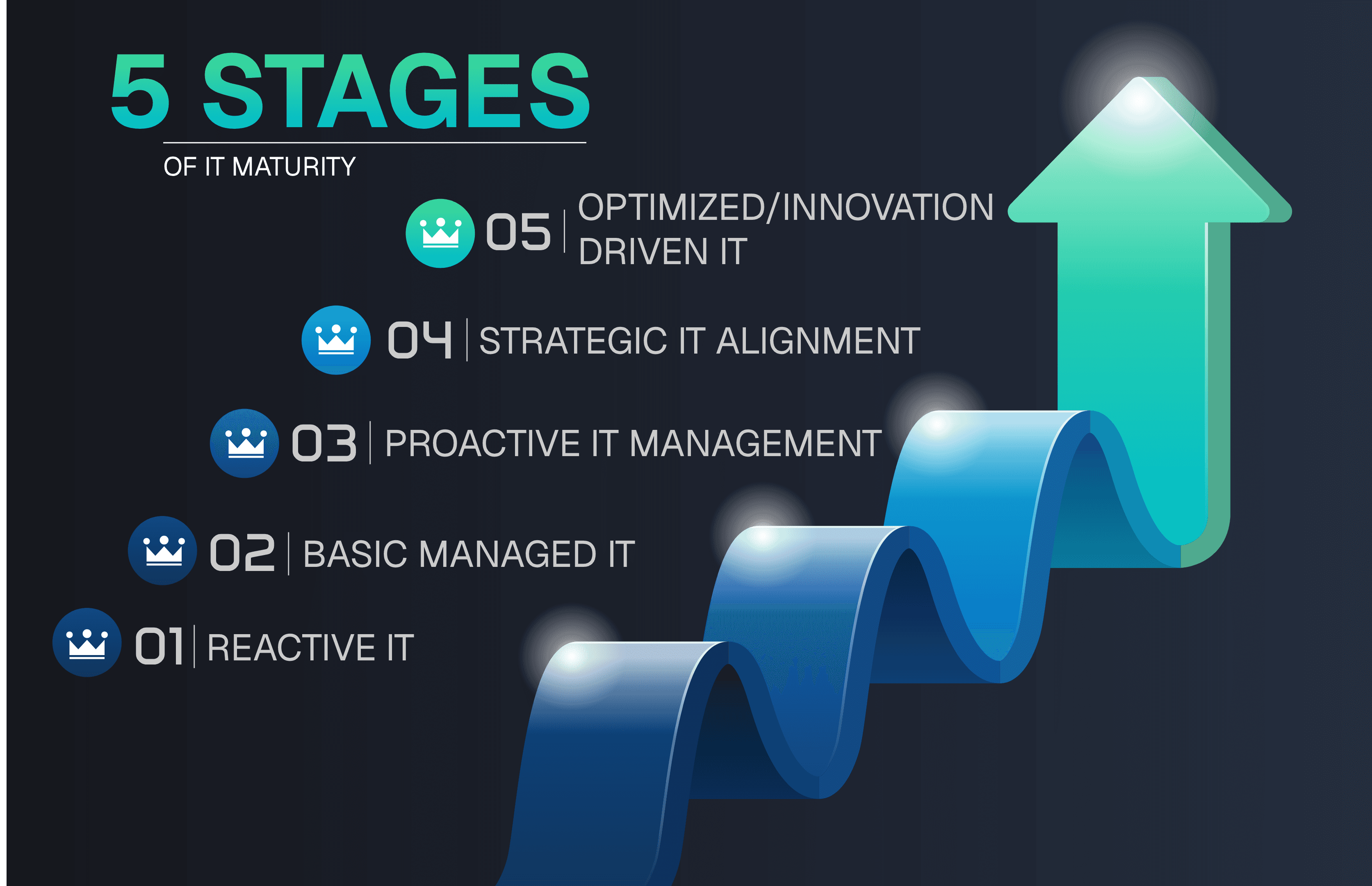
This is the same pattern we explored in “The IT Maturity Model: How Growing Businesses Scale Technology Without Breaking Operations”
👉 https://www.kineticcg.com/blog/the-it-maturity-model-how-growing-businesses-scale-technology-without-breaking-operations
As businesses scale, complexity increases faster than structure. And when structure does not keep up, gaps begin to form, not in what you have, but in how everything works together.
The Illusion of a “Complete” IT Environment
Technology environments are often built incrementally. A company adds tools as problems arise:
A backup platform after a scare
Security tools after a phishing incident
Cloud systems during growth
Remote access solutions for flexibility
Over time, this creates what looks like a complete ecosystem.
But as we highlighted in “The Real ROI of Managed IT Services for Growing Businesses”, the value of IT is not in individual tools, it is in how effectively they operate as a system
👉 https://www.kineticcg.com/blog/the-real-roi-of-managed-it-services-for-growing-businesses
Without that cohesion, businesses end up with functional technology that does not translate into operational reliability.
Where IT Strategy Breaks Down
1. Systems Are Implemented, Not Integrated
Most environments are a collection of solutions rather than a designed architecture.
You might have:
Backup systems running correctly
Endpoint protection deployed across devices
Cloud platforms supporting collaboration
But if these systems do not communicate or support each other, they create blind spots.
This becomes especially visible during incidents, where multiple systems generate signals, but no unified response occurs.
2. Growth Outpaces Structure
As organizations grow, IT environments evolve quickly:
Growth Stage | What Happens |
|---|---|
Early Stage | Simple, centralized systems |
Expansion | New tools added rapidly |
Maturity | Complexity increases without standardization |
We see this frequently in environments that still operate reactively, which we broke down in “The Hidden Costs of Reactive IT Support”
👉 https://www.kineticcg.com/blog/the-hidden-costs-of-reactive-it-support
Without a structured roadmap, growth introduces inefficiencies, inconsistencies, and risk.
3. Visibility Does Not Scale With Complexity
As more systems are introduced, visibility becomes fragmented.
Different platforms provide different perspectives:
Infrastructure monitoring
Endpoint activity
Cloud usage
Backup status
But very few businesses have a centralized operational view.
This is where issues begin to compound. Not because systems fail individually, but because no one sees the full picture in real time.
4. IT Becomes Operationally Reactive
When systems are not aligned, IT teams spend more time responding than planning.
This creates a cycle:
Issues arise unexpectedly
Teams respond under pressure
Temporary fixes are applied
Long-term improvements are delayed
Over time, this erodes efficiency and increases risk exposure.
5. Technology Decisions Are Not Business-Aligned
One of the most overlooked gaps is the disconnect between IT decisions and business objectives.
For example:
Infrastructure may be optimized, but workflows are inefficient
Security controls exist, but do not align with actual risk exposure
Tools are deployed, but adoption is inconsistent
This results in technology that works technically, but not strategically.
The Real Problem: Lack of IT Cohesion
The issue is not that businesses are under-equipped.
It is that their environments are fragmented instead of orchestrated.
Modern IT includes:
Cloud platforms
SaaS applications
Remote endpoints
Identity systems
Backup and recovery solutions
Without a cohesive strategy, these components operate independently.
And independence in IT is where risk and inefficiency grow.
What Mature IT Environments Do Differently
The shift from reactive to strategic IT is what defines maturity.
Area | Reactive Environment | Strategic Environment |
|---|---|---|
Architecture | Tool-based | System-based |
Visibility | Fragmented | Centralized |
Growth | Unstructured | Planned |
Support | Reactive | Proactive |
Outcomes | Unpredictable | Consistent |
Mature environments are not necessarily more complex. They are more intentional.
The Role of Strategy in Modern IT
Technology should not evolve randomly. It should follow a defined strategy that considers:
Business goals
Risk tolerance
Growth trajectory
Operational dependencies
When IT is aligned with these factors, it becomes an enabler rather than a constraint.
This is where many businesses begin to see measurable improvements in:
Operational efficiency
System reliability
User productivity
Cost predictability
Why This Matters More Than Ever
The pace of change in business technology is accelerating.
Cloud adoption, remote work, automation, and AI are increasing both opportunity and complexity.
Without a structured IT strategy:
Complexity compounds
Risk increases
Costs become unpredictable
Performance becomes inconsistent
Businesses that fail to adapt their IT approach will not just face technical challenges; they will face operational limitations.
The Kinetic Perspective
At Kinetic Consulting Group, we consistently see environments that are well-equipped but poorly aligned.
The opportunity is not to replace what exists, but to restructure how it operates.
Our approach is built around three core principles:
Strategy: Designing IT environments that align with business objectives
Security: Ensuring protections are integrated into operations, not layered on top
Scalability: Building systems that grow without introducing instability
When these elements are aligned, technology becomes predictable, resilient, and scalable.
Final Takeaway
The biggest gap in modern IT is not a missing tool.
It is the lack of a unified strategy connecting everything together.
Businesses that address this will move from reactive operations to controlled, scalable environments.
Those that do not will continue to experience inefficiencies, disruptions, and unnecessary risk, regardless of how many tools they deploy.